Call Us Anytime +86-591-83626970
Email Us Now sales@wts-photonics.com
Call Us Anytime +86-591-83626970
Email Us Now sales@wts-photonics.com
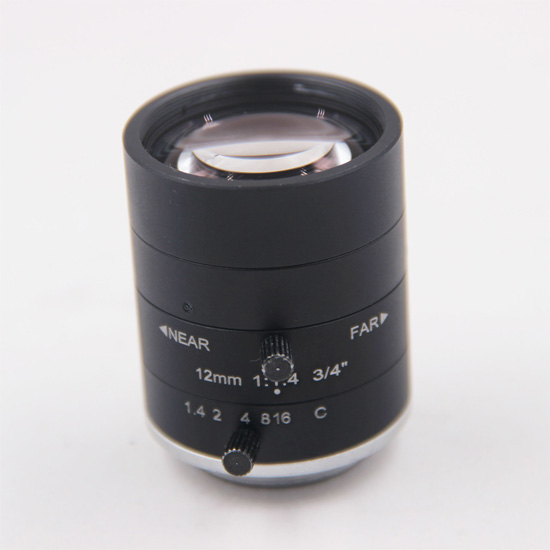
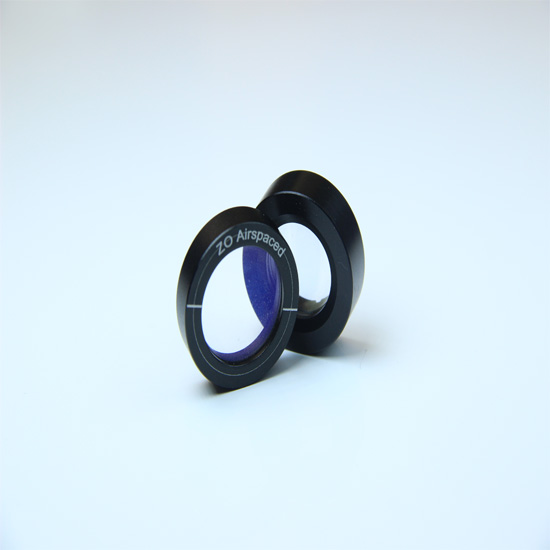
Industrial lenses are specialized optical devices designed for industrial automation, machine vision, and other demanding fields.
They offer high resolution, low distortion, broad spectral response (visible, infrared, and ultraviolet), and industrial-grade environmental durability (dust, water, temperature, and vibration resistance), enabling precise detail capture and image data collection.
Payment :
T/T PaymentProduct Origin :
ChinaShipping Port :
Fuzhou, China1.High-Precision Imaging
Compared with consumer-grade lenses (such as those in smartphones and cameras), industrial lenses place greater emphasis on controlling geometric distortion (typically <0.1%), resolution (compatible with high-resolution industrial cameras), and contrast to preserve fine detail during inspection or measurement.
For example, in semiconductor wafer inspection, industrial lenses must resolve micron-scale defects, requiring resolutions of several tens of line pairs per millimeter (lp/mm).
2.Adaptability to Complex Environments
Vibration and Shock Resistance: Industrial production lines involve constant mechanical motion. Lenses must therefore be designed with features such as metal housings and reinforced lens elements to withstand vibration and prevent optical misalignment.
Wide Temperature Range: Some applications, such as high-temperature workshops and cold-chain logistics, require lenses to operate reliably from -20°C to +60°C or under even more extreme conditions.
Dust and Moisture Resistance: Lenses are typically rated IP65 or higher for protection against dust and liquid ingress.
3.Interfaces and Compatibility
Common interfaces include C-mount (flange focal distance 17.5 mm), CS-mount (12.5 mm), and F-mount. These must match the sensor size of the industrial camera (e.g., 1/2-inch or 2/3-inch sensors).
Some lenses support zoom, manual or automatic aperture adjustment, or integrated illumination control (e.g., telecentric lenses with coaxial light sources).
(1)Features:
Uses a telecentric optical design in which the chief rays on the object and image sides are parallel to the optical axis. This eliminates perspective distortion (where closer objects appear larger) and delivers extremely high measurement accuracy (errors below 0.1%).
The large depth of field enables uniform, clear imaging at different object distances.
(2)Applications:
Precision dimensional measurement (e.g., aperture of automotive parts, pad spacing on PCBs), 3D topography scanning, and semiconductor packaging inspection.
(1)Features:
Fixed focal length, simple structure, and low cost; suitable for fixed working distance applications such as fixed-station inspection on assembly lines.
Available in different focal lengths (e.g., 8 mm, 12 mm, 25 mm) to suit various field-of-view requirements, and compatible with cameras of different resolutions.
(2)Applications:
Logistics barcode reading, food packaging defect detection, and metal surface scratch inspection.
3.Zoom Lens
Focal length is adjustable within a certain range (e.g., 5–50 mm). Zoom can be adjusted manually or motorized to accommodate different fields of view.
Some high-end zoom lenses are parfocal (focus remains stable during zooming), making it easy to switch between dynamic scenes.
Flexible production lines (requiring adaptation to workpieces of different sizes), security monitoring (large-area scanning), and robotic vision guidance (dynamic field-of-view adjustment).
Used with line-scan cameras, the lens forms a linear focal plane, allowing continuous scanning of moving objects such as conveyor belts to build a two-dimensional image.
The scan width is determined by the focal length and the pixel count of the line-scan camera (e.g., with a 2048-pixel line-scan camera, the field of view can exceed 1 meter).
Paper and film surface defect detection, color accuracy inspection of printed materials, and inline flaw detection on metal sheets.
Provides high-magnification imaging at close range (magnification typically 0.1×–5×). Working distances can be as short as a few millimeters, with excellent detail reproduction.
Often used with a ring light to eliminate shadows; suitable for imaging small objects.
Inspection of electronic components (e.g., chip pins, capacitor solder joints), microscopic imaging of specimens, and surface texture analysis of precision parts.
| Product Specification | |||||
| Mount Type | C-Mount | ||||
| Aperture Type | Automatic/Manual | ||||
| resolution | MP | ||||
| focal length | 8-100 mm | ||||
| F/NO. | F1.4-F5.6 | ||||
| Chip size | 2/3″ | ||||
| Focus control | Manual | ||||





Please Read On, Stay Posted, Subscribe, And We Welcome You To Tell Us What You Think.
Copyright @ 2026 WTS Photonics Co., Ltd. All Rights Reserved.  Network Supported 闽ICP备2024080551号
Sitemap / Blog / Xml / Privacy Policy
 English
  Français
 Deutsch
 Русский
 Español
 عربي
عربي 日语
日语 Türk
Türk Tiếng Việt
 中文
中文